Defend your thesis before the day you defend it.
You know the research better than anyone in the room. The defense tests something else: holding a line of argument while a committee member interrupts you.
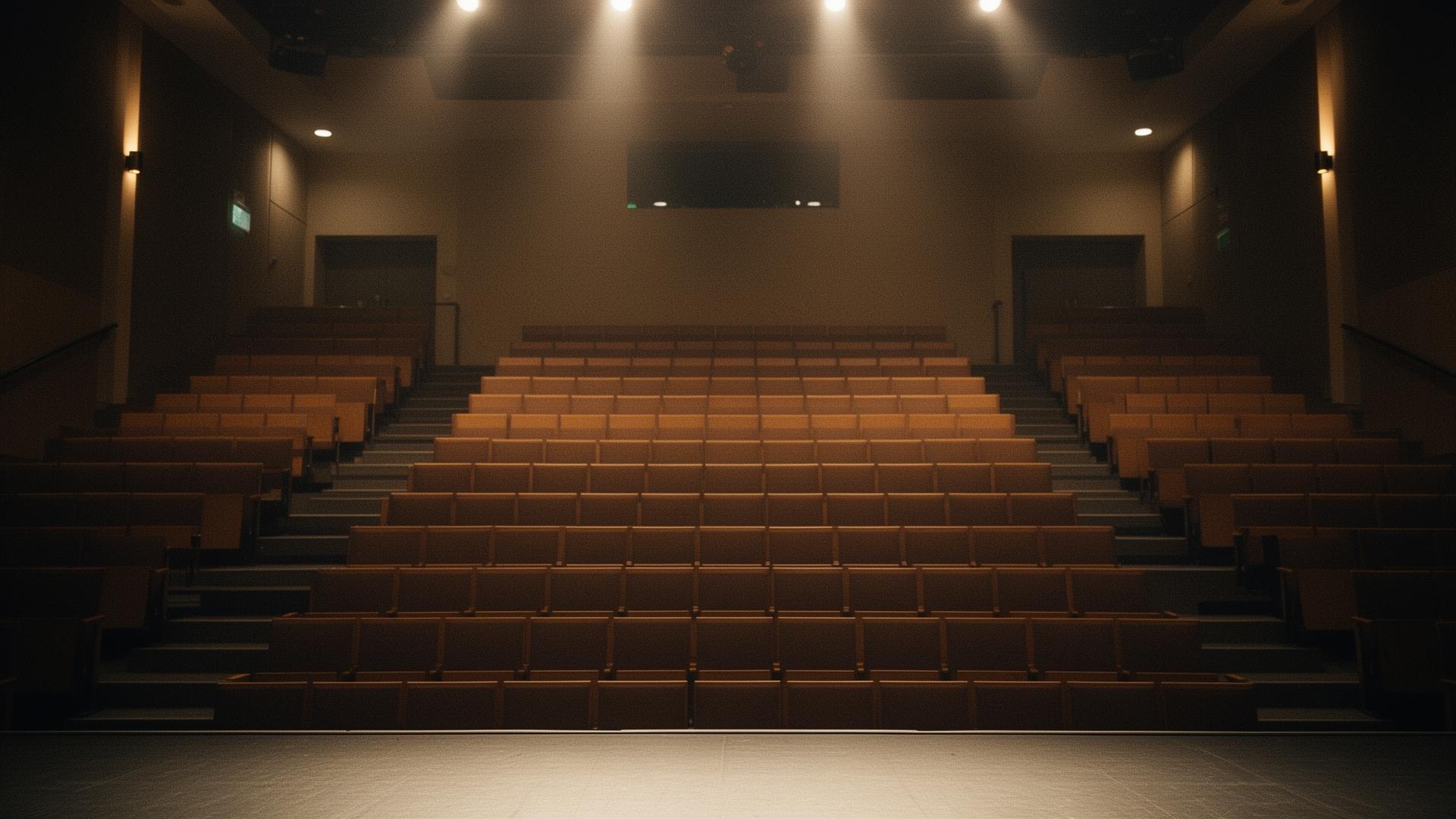
The content is finished. The defense is not.
Years of work compress into ninety minutes, and most candidates have rehearsed only to a mirror or a patient friend. Neither asks the question that breaks your rhythm.
- A committee question arrives mid-sentence and your structure dissolves.
- You over-explain methods because silence feels like weakness.
- Your opening spends two minutes on context before stating the contribution.
A committee that listens, then asks.
Kleig rebuilds the seminar room, its acoustics, its stillness, the shuffle of a panel. In Q&A defense drills, the audience asks follow-up questions drawn from what you actually said, not from a generic list.
- 1
Upload your defense deck
Kleig reads the slides and builds notes you can glance at, not read from.
- 2
Rehearse in the committee room
Full run, opening only, or a Q&A defense round with reactive follow-ups.
- 3
Read the verdict
Pace, filler words, pauses and structure, each with a reason and the next drill to run.
Exposure-based practice, rehearsing in conditions that resemble the feared situation, is an established approach in the clinical treatment of public-speaking anxiety, including studies using virtual audiences. Kleig applies the same principle to preparation: you meet the room before the day you meet it.
See, for example, Anderson et al., “Virtual reality exposure therapy for social anxiety disorder,” Journal of Consulting and Clinical Psychology, 2013.
Your recordings are used only to prepare you, stored encrypted, and deletable from Settings at any time. How we handle your data
Will it judge whether my research is correct?+
No. Kleig evaluates delivery and structure only. Your committee judges the science; Kleig makes sure the way you present it holds up.
My field is highly specialised. Does that matter?+
Follow-up questions are built from your own words and material, so they stay inside your subject rather than drifting to generic prompts.
What happens to my recordings?+
They are used only to prepare you and stored encrypted. From Settings you can delete your profile, rehearsals, feedback and plans at any time.
Is there a free trial?+
No. Kleig is paid-only, so the plans and what they include are stated plainly on the pricing page before you commit.